Punda – Willemstad, Curaçao - Part 4
The Economic Future of the Historic City Center
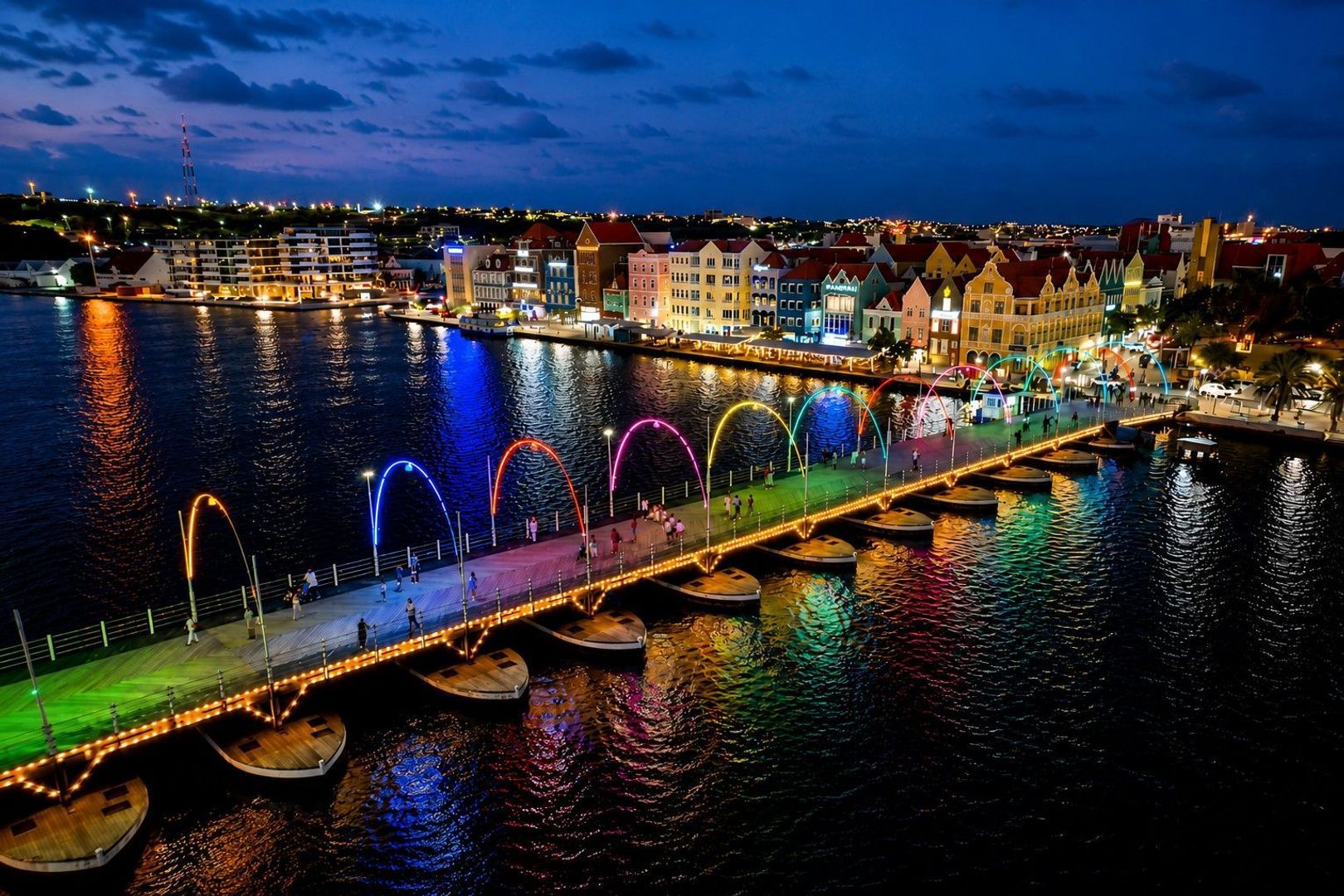
Punda has served as a central component of Willemstad for decades. Historically, the district developed as Curaçao’s administrative, commercial, and cultural core and continues today to function as a key economic hub within the capital’s historic city center. At the same time, the role of the area is gradually evolving. Tourism, hospitality, events, and new investment activity are generating increased momentum, while also raising questions regarding the long-term balance between economic growth, livability, and historic preservation.
A Changing Urban Core
Over recent years, the economic function of Punda has shifted noticeably. While the district was traditionally centered around retail and local services, hospitality, leisure, and tourism-related uses now occupy an increasingly prominent position. This trend mirrors broader international patterns seen in historic urban centers, where traditional shopping districts are transforming into mixed-use experiential environments.
As a result, the use of public space within Punda continues to evolve. The historic district is increasingly positioned as a destination for visitors, events, entertainment, and lifestyle-oriented activity. The resulting vibrancy contributes to the area’s economic appeal, while simultaneously reshaping the day-to-day character of the neighborhood.
Tourism as a Primary Economic Driver
Tourism remains one of Curaçao’s principal economic pillars and plays an increasingly significant role within Punda. Cruise tourism, stay-over visitors, restaurants, hospitality venues, and cultural programming collectively generate substantial activity throughout the historic center. Evening events, festivals, and public initiatives further strengthen the district’s visibility and commercial attractiveness.
Punda’s appeal is closely tied to the historic identity of the neighborhood itself. Its monumental architecture, compact urban fabric, and cultural character distinguish the district from more modern commercial environments. As a result, the area’s heritage value represents not only a cultural asset, but also an important economic driver.
At the same time, a strong reliance on tourism introduces certain vulnerabilities. Economic fluctuations, changing travel patterns, and external market conditions can directly impact visitor volumes and consumer spending. Across many historic cities worldwide, this has led to ongoing discussions regarding the extent to which urban centers should become economically dependent on tourism-driven activity alone.
Increasing Pressure on Space and Real Estate
Growing economic activity within Punda is also affecting real estate and land use patterns throughout the district. As hospitality venues, short-stay accommodations, and commercial concepts continue to expand, competition for available properties is increasing. Historic buildings in prime locations remain particularly attractive to investors, developers, and business operators.
This trend can positively contribute to restoration initiatives, adaptive reuse projects, and the reduction of long-term vacancy. Properties that remained underutilized for extended periods are gradually being repositioned and reintegrated into the economic fabric of the city center. At the same time, however, there is a risk that other urban functions may gradually diminish.
When commercial operations consistently generate stronger financial returns than permanent residential occupancy, the number of full-time residents may continue to decline. This inevitably impacts the overall character of the district. Historic urban centers generally perform most sustainably when a balanced mix of residential, commercial, and recreational uses remains intact.
Authenticity as an Economic Asset
Within historic city centers, authenticity represents a significant component of long-term economic value. Visitors are drawn not solely by retail or dining opportunities, but by the combination of history, architecture, and urban identity. Preserving the character of the district is therefore not only culturally relevant, but also economically strategic.
This creates an important long-term challenge for Punda. Continued development requires investment, adaptive reuse, and economic expansion, while simultaneously avoiding the loss of identity through excessive commercialization or disproportionate tourism-oriented use.
Various long-term development visions for Willemstad therefore emphasize the importance of maintaining a balanced urban environment in which heritage preservation, residential use, entrepreneurship, and public space reinforce one another. Ultimately, the quality of the historic center is determined not only by the restoration of buildings, but also by the way the district functions as an integrated part of the city on a daily basis.
A Historic District in Transition
Punda is currently undergoing a gradual period of transformation. The district continues to strengthen its position as an economic center, tourism destination, and cultural landmark of Curaçao. At the same time, decisions regarding land use, livability, and functional balance within the historic core are becoming increasingly important.
The central question for the coming decades is likely not whether Punda will continue to evolve, but how that evolution can be managed in a balanced and sustainable manner. Within that challenge lies the future of a historic urban center seeking to remain vibrant, economically resilient, and authentic at the same time.
Source: qracao.com – Vision Document