Punda – Willemstad, Curaçao
Our Showcase — and Our Responsibility
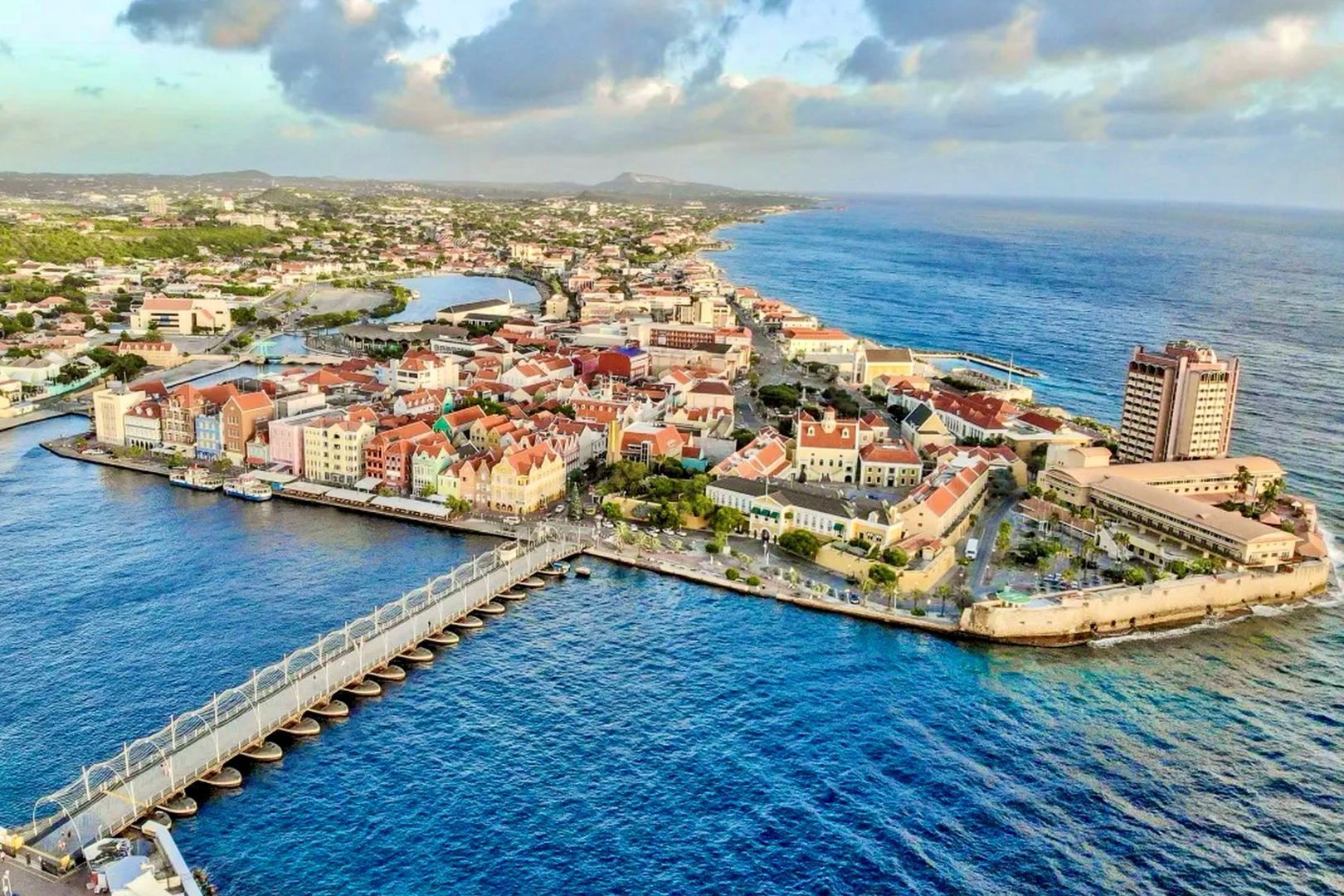
Punda is the historic core of Willemstad and forms a key component of the UNESCO World Heritage Site. The iconic façades along Handelskade define Curaçao’s international image. Behind this architectural frontage, however, lie structural challenges related to vacancy, building maintenance, infrastructure capacity, and urban development.
Over the coming year, this column will provide monthly coverage of Punda. We will report on relevant developments, offer background analysis, and present factual insights into the historic city center, monitoring the factors that influence its performance and long-term viability.
An Internationally Recognized Historic Core
Willemstad’s historic center was inscribed on the UNESCO World Heritage List in 1997, recognized for its distinctive combination of European urban planning principles and Caribbean architectural adaptation. Punda represents the city’s oldest district, with a street grid dating back to the seventeenth century.
A significant portion of the building stock is designated as protected heritage or falls within a legally protected cityscape. As a result, alterations, renovations, and restorations are subject to regulatory oversight and specific conservation guidelines.
While this designation safeguards the architectural character of the district, it also imposes obligations. Maintenance and restoration of listed properties require specialized expertise, appropriate materials, and coordination with the relevant authorities. Investment in a protected historic center therefore differs fundamentally from development in a greenfield or non-regulated urban area.
Vacancy and Limited Residential Use
Although Punda is widely perceived as a vibrant district, the number of permanent residents remains limited. Ground floors are predominantly occupied by retail, office, hospitality, and institutional functions, while upper floors are frequently vacant or underutilized.
This mixed-use imbalance is not new, but it directly affects the district’s vitality outside commercial hours. Structural vacancy not only represents unrealized residential capacity, but also increases maintenance risk. Buildings that are not consistently occupied tend to deteriorate more rapidly.
Adaptive reuse for residential purposes is often complex. Heritage constraints, structural limitations, and regulatory requirements can make conversion technically challenging and financially demanding. This creates a structural tension between preservation objectives, functional use, and economic feasibility.
Infrastructure Under Pressure
Beyond the condition of individual buildings, infrastructure plays a critical role in Punda’s future sustainability. The district was designed in an era when automobile traffic, parking demand, and modern utility systems were not dominant planning considerations.
Today, accessibility, parking capacity, and the performance of the sewer system are recurring points of discussion. Increased activity resulting from new hospitality projects and other large-scale developments in and around the historic center intensifies usage levels within a spatially constrained environment.
This raises legitimate questions regarding carrying capacity. In a protected historic core with limited physical expansion options, infrastructure upgrades are neither straightforward nor without impact on heritage values.
Between Preservation and Transformation
Punda reflects a broader urban challenge: how can a historic city center remain economically and socially functional without compromising its architectural integrity? Preservation alone does not guarantee vitality, yet uncoordinated growth can undermine the very qualities that define the area.
The long-term resilience of Punda requires alignment between heritage policy, urban planning strategy, and infrastructure investment. The discussion is therefore not solely about façades or tourism, but about how Willemstad’s historic center can continue to operate as a sustainable and integrated part of the city.
In the months ahead, we will examine specific dimensions of this issue in greater depth — from heritage regulation and residential use to infrastructure capacity and emerging development initiatives.